Fire Resistant Cable Ireland: How to Pick the Right Fire Alarm Cable for the Job

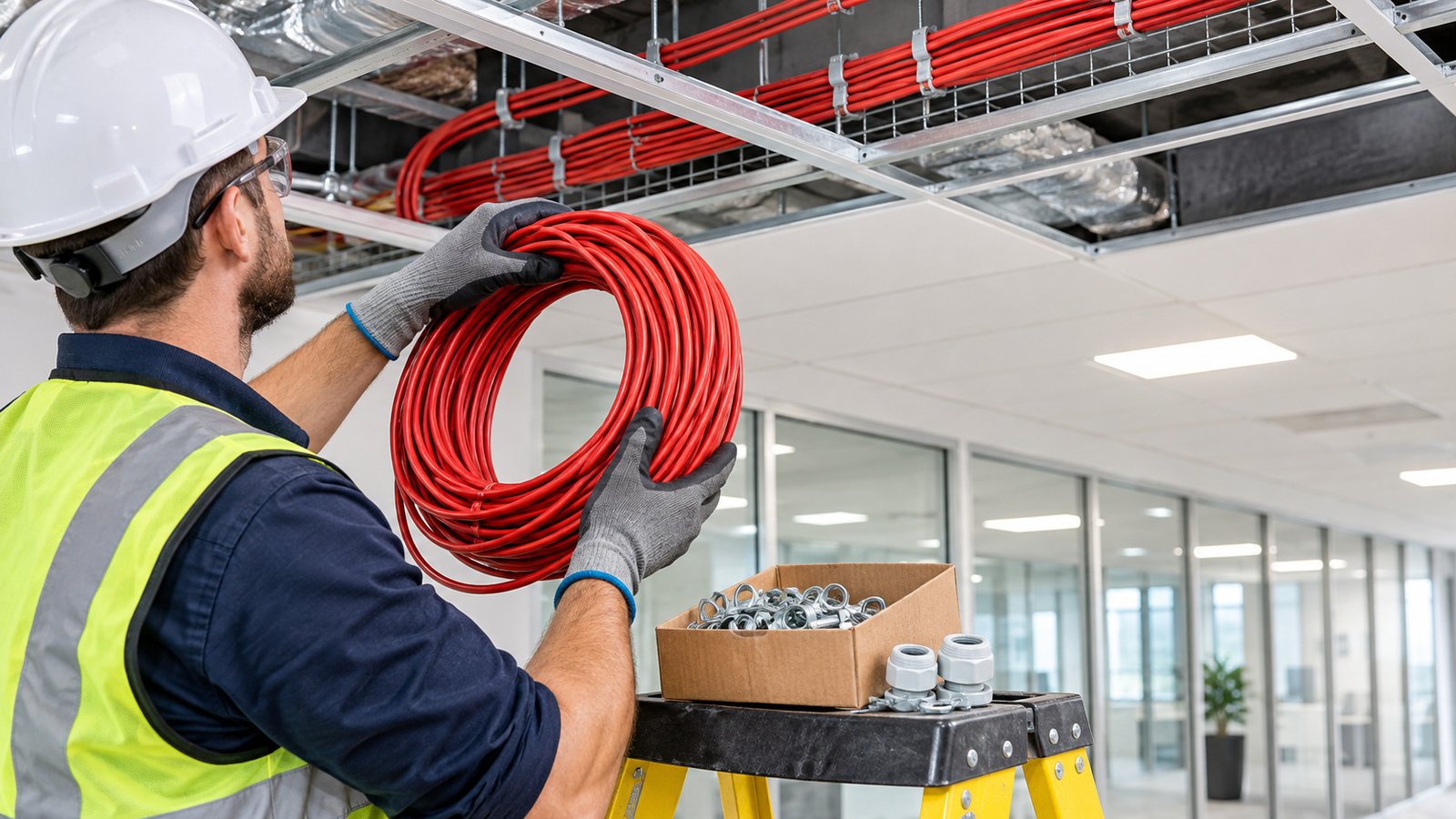
Ask any electrician about their most annoying call-back and you will hear the same story a lot. Someone grabbed the wrong cable. It was the right size, it looked fine, and it passed a quick glance on site. Then the fire alarm failed a test, or an inspector started asking questions, and the whole run had to come out.
If you order fire resistant cable Ireland jobs rely on, a few minutes of checking before you buy can save days of rework. Here is what trade buyers should look at before they order fire alarm cable.
Fire Alarm Cable Is Not the Same as Alarm Cable
This is where most mix-ups start. On a shelf, a white six-core alarm cable and a red fire-resistant cable can look like cousins. They are not.
An ordinary alarm cable is made for burglar alarms and other low-voltage circuits. It carries a signal, and that is about it. Fire alarm cable has a tougher job. When a fire starts, the cable has to keep working long enough for the alarm to sound and for people to get out. Standard PVC cable gives up quickly in heat. Fire resistant cable is built to keep going.
Picture a small office fit-out. The installer runs a white alarm cable for the fire alarm because it was to hand and the same size. Everything works on handover day. But in a real fire, that cable could fail in the first few minutes, which is exactly when the alarm needs it most.
That is why fire alarm circuits usually call for red fire-resistant cable and why swapping in something similar is a real risk. Your system designer’s specification has the final word, so check it before you order.
How to Read a Fire Resistant Cable Label
Cable labels can look like alphabet soup, but four things matter most.
- The standard. Fire resistant cable is usually made to a recognized standard such as BS 7629. The red 2-core and earth 1.5 mm fire resistant cable we stock is listed to BS 7629 on its product page. The standard tells you the cable has been tested for the job.
- The fire rating. You will often see something like PH60. That is a way of saying how long the cable keeps its circuit working in a fire, and PH60 is a 60 minute rating. Match the rating to what the design asks for, not to what happens to be on the shelf.
- Low smoke and fumes. Cables marked LSF or LSZH give off far less smoke and fewer harmful fumes when they burn. In a shop, school, or office, that matters a great deal, because people need to see their way out.
- Color. The fire alarm cable is normally red, which makes it easy to spot above ceilings and in risers. A cable in the wrong color is a warning sign, so double-check what it is before it goes in.
Mistakes That Cost Time on Site
Most problems with fire alarm cable are small things that get missed on a busy day. These are the ones worth watching.
- Wrong core count or size. A 2-core and earth run is not the same as a 4-core. Check the spec sheet, not your memory of the last job.
- Wrong length. Reels often come in 100-meter lengths. Measure the route, add a little for bends and awkward corners, and think about whether the leftovers will be useful on the next job. Running short on a reel mid-job is a miserable afternoon.
- Forgetting the fixings. The cable can survive a fire, but if the clips melt, the cable drops. Plastic clips and ties on their own are a poor choice on fire alarm runs, so ask what supports your specification calls for.
- Careless joints. Any joint on a fire alarm circuit needs the right fire-rated connector and box, not a standard junction box that happens to be in the van. Joints are also weak points, so keep them to a minimum.
- Losing the paperwork. Keep the datasheet and the label details. Clients and inspectors sometimes ask for them months later.
What to Ask Your Supplier
A good wholesaler should be able to answer a few simple questions without hunting around. Is this cable in stock? What standard does it meet? Can I see the datasheet? How soon can it be delivered?
Clonegal Electrical supplies trade customers across Ireland, so you can order the cable, glands, clips, and boxes for a job in one go instead of chasing several suppliers. Our range covers fire resistant cable, alarm cable, LSF, and LSZH cables, plus the glands, clips, and boxes that go with them. If you are not sure which cable matches your spec, tell us what the job is and we will point you to the right product.
A Quick Checklist Before You Order
Print this out or keep it on your phone.
- Check the specification from the system designer.
- Confirm the core count, size, and reel length.
- Note the standard and fire rating on the label.
- Sort the clips, joints, and glands before you start.
- Save the datasheet for the job file.
Get It Right the First Time
A fire alarm cable is one of those products where the small print matters. Pick the right standard, check the rating, buy the proper fixings, and keep the paperwork, and the job goes the way it should.
For fire resistant cable Ireland trade buyers can rely on, browse our range online, or get in touch with the team and tell us what you need. We are happy to help you get the order right the first time.
Frequently Asked Questions
1. Can normal alarm cable be used for fire alarms?
No, you must not use the normal alarm cable for fire alarms. A normal alarm cable is suited for burglar alarms and low voltage wiring and is not designed for operation under fire conditions. Fire alarms need to be installed with red fire-rated cable. Make sure to check the specification before your order.
2. What does PH60 mean with fire resistant cables?
PH60 indicates that the cable can maintain the electrical circuits for 60 minutes during fires. The higher the rating, the longer the time. Always follow the specifications given by your system designer.
3. Where to buy fire rated cables in Ireland?
Fire rated cables can be purchased from trade wholesalers like Clonegal Electrical, who supply qualified electrical contractors and businesses in Ireland. Make sure to check the specifications, cable core count, and reel length from the website.