The Real Cost of Sticking With Old Lighting and What LED Panels Actually Change

Flipping a switch in an old warehouse can lead to a certain feeling of apprehension as half the fluorescent lights flash, make buzzing noises, and finally go out. Anyone who has run a commercial property in Ireland for a while has certainly experienced this situation. What’s almost as bad is the subsequent thought about the huge costs involved, of which one is not conscious. That’s really the conversation worth having about LED lighting Ireland businesses are increasingly moving to, not the sales-pitch version, but the practical one.
The Bulb Was Never the Real Expense
Most people budget for lighting based on the price of the fitting. That’s the wrong number to look at. A fluorescent tube might cost a few euros, but the electricity it burns through over its lifespan, the labor to replace it every year or two, and the flickering ballasts that need swapping—that’s where the real spend hides. Old lighting systems are quietly expensive in a way that never shows up as one clean figure on an invoice.
LED panels flip that equation. The fitting itself costs more upfront; no getting around that. But the running cost drops hard; commercial users typically see energy use for lighting fall by more than half, and the fittings themselves are rated for tens of thousands of hours before they need attention. For a retail unit or office running lights ten or twelve hours a day, that’s the difference between a maintenance job every season and one every few years.
Why Panels Specifically (Not Just “LED”)
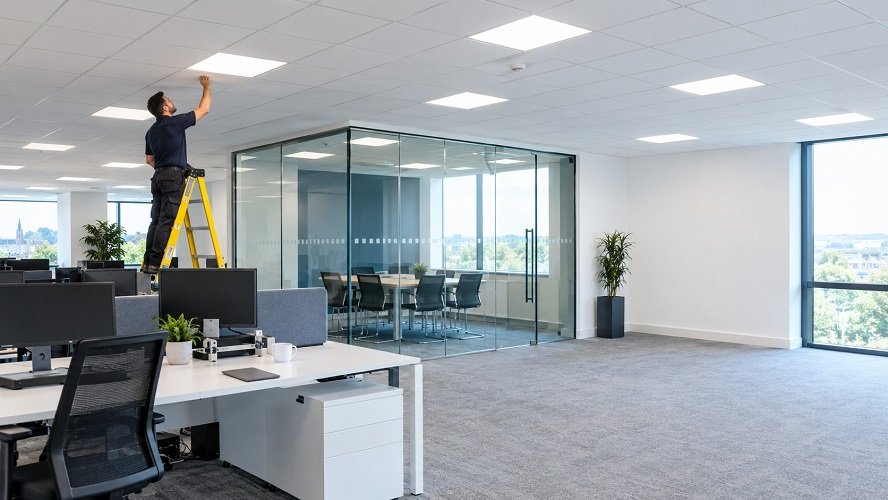
A lot of blog posts become fuzzy at this point, so let’s clarify. The LED panel is the flat, recessed fixture that is inserted into suspended ceilings, like the grid tiles that are commonly used in offices, shops, and public buildings across Ireland. Although other LED systems do exist, including batten-style, high bay, downlight, and floodlight solutions, LED panels have become the norm for good reason: they supply an even light throughout a room without the glaring spots that older recessed installations caused, plus they are flush-fitting, which is important in areas where ceiling height is limited.
The detail that actually matters when choosing one isn’t brightness alone; it’s color temperature. A panel rated around 4000K gives a neutral, work-friendly light that suits offices and retail. Go warmer, closer to 3000K, and it suits hospitality or anywhere you want a softer feel. Get this wrong, and a space that should feel sharp and professional ends up looking either clinical and cold or dim and yellow; no amount of wattage fixes a color temperature mismatch.
The Retrofit Question Nobody Explains Properly
In the instance that you are dealing with an older structure, you have to ascertain if it is smarter to retrofit existing fittings with LED or whether the whole system needs to be torn out and replaced. Retrofit LED panels have been designed to slot straight into existing fixtures, making sure that disruptions are kept to a minimum in terms of both time and money spent. Although, in an ideal world, it might not always be the best option, for someone who needs to minimize downtime, it is often the only option available.
This is where an electrician is far more valuable than any specification sheet. Wiring in older Irish commercial buildings varies widely, and what might be optimal in newer buildings may need modifications in existing ones from the past.
Testing and Maintenance: The Part People Forget
Here’s something that catches a lot of businesses off guard: installing emergency lighting isn’t a one-and-done job. Irish fire safety standards require regular testing, typically a monthly function test and a full annual duration test where the system runs on battery power for its rated time (often three hours) to confirm it’s actually working when it counts.
Skipping this isn’t just risky; it can also invalidate insurance claims or land you in trouble during a fire safety inspection. A well-maintained system on paper means nothing if the batteries have quietly died in the back office.
Getting It Right the First Time
At Clonegal Electrical, most of the LED upgrades we do aren’t glamorous full refits; they’re practical jobs where a business owner has finally had enough of buzzing tubes and rising bills and wants it sorted properly. That usually means a walk-through first, a straight answer on retrofit versus replacement, and fittings specified for the actual use of the space rather than whatever’s cheapest that week.
If your lighting is still running on fluorescent tubes and you’re not sure whether a retrofit makes sense for your building, that’s the conversation worth having before you spend anything.
Frequently Asked Questions
1. Are LED panels compatible with existing ceiling grids, or does it require a complete renovation?
In general, retrofit LED panels in Ireland are fitted directly into standard suspended ceiling grids. Therefore, there is no need for any structural intervention. Although it needs to be verified that the building’s wiring and ceiling grid match the type of LED lights planned.
2. Which color temperature should I choose for the office/shop?
Generally, a neutral 4000K is a good choice. It works well for making offices and shop interiors well-lit but comfortable. However, for hospitality venues that need to provide a cozy atmosphere, 3000 K color temperature is preferable. Many people make a common mistake here because this parameter influences the ambience more than brightness does.
3. How much does a company expect to save with the transition to LED panels?
Savings from LED panels depend on many factors, such as building type and setup, but usually companies experience over a 50% decline in energy consumption. What is more, modern LED lamps don’t require maintenance from time to time, contributing to a fast return on investment.