Flexible Conduit Ireland: Sizes, the 30mm Question and What to Check Before You Order

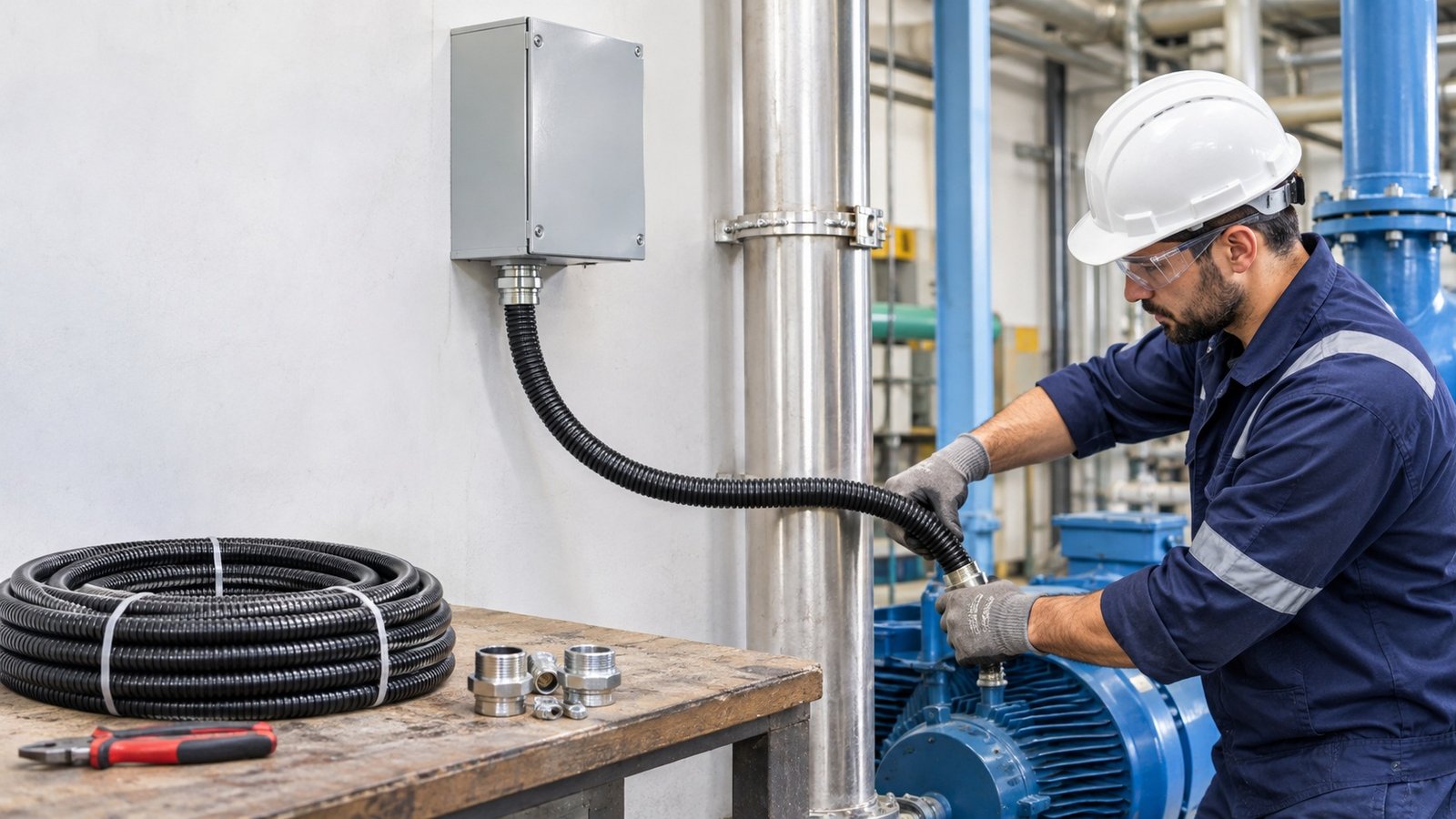
You are halfway through a job, and the cable run has to turn a corner that rigid conduit simply will not make. Or you are connecting a motor that vibrates. Or you are working in a plant room where every wall seems to be in the way. This is where flexible conduit earns its place in the van.
If you are sourcing flexible conduit Ireland suppliers who keep in stock, the choices can feel confusing at first. Sizes, materials, fittings and reel lengths all vary. This guide explains what to check so the order is right the first time.
What Flexible Conduit Is Actually For
Flexible conduit protects cables in places where a rigid pipe cannot go. It bends round obstacles, copes with a little movement and makes awkward final connections much easier. It also gives cables some protection from knocks, dust and everyday wear, which matters on busy sites.
Common uses include the last stretch to motors and machinery, short runs round tight corners, plant rooms, and retrofit jobs in existing buildings where the route is already crowded. It is also handy for equipment that needs to be moved or serviced from time to time.
It is not a cure for poor planning, though. Long straight runs are usually better in rigid conduit or trunking, with flexible conduit saved for the awkward last metres.
Flexible Conduit 30mm: Does It Exist?
Plenty of people type flexible conduit 30mm into a search bar, and it is easy to see why. The number 30 turns up on a lot of listings. But flexible conduit is normally sold in standard nominal sizes such as 16, 20, 25, 32, 40 and 50mm, and 30mm is not one of them.
So where does the 30 come from? Usually one of two places.
- The reel length. Conduit often comes in 30-metre lengths, so a listing such as 32/37 mm, 30 metres, is easy to misread as 30 mm.
- The outside diameter. A 25mm conduit measures roughly 30mm across the outside, which is why fittings for it are often labelled 25/30mm. The first number is the nominal size, and the second is roughly the outside size.
If your job needs something around 30mm, the realistic choices are 25mm and 32mm. Measure the cables you need to fit, allow room to pull them through, and pick the size that works with a little space to spare. A tight fit is one of the most common reasons a cable pull goes wrong, so going up a size is rarely a waste. Our own range includes 32/37mm flexible conduit in 30 metre lengths, with matching glands.
Matching the Conduit to the Gland
Flexible conduit is only as good as its connection. The gland, or fitting, holds the conduit to the box or enclosure and keeps the cables protected where they go in. The gland size has to match the conduit size, which is why they carry the same kind of label, such as 32/37 mm or 25/30 mm.
Before you order, write down three things: the conduit size, the entry size on the box, and how many fittings you need. We stock glands from 12/16 mm up to 50/56 mm, so it is easy to order the conduit and the fittings together.
Mistakes That Cause Trouble on Site
Most problems with flexible conduit are small things that get missed on a busy day. These are the ones worth watching.
- Choosing a size that is too tight. Cables need room to be pulled in and to move. Squeezing in too many is a classic mistake.
- Bending it too sharply. Every conduit has a minimum bend radius. Kink it, and you squeeze the cables and weaken the conduit.
- Forgetting support. Long unsupported lengths sag over time. Use saddles or clips at sensible intervals and follow the maker’s guidance.
- Using it outdoors without checking. Not every flexible conduit suits sunlight, damp or cold. Check the product details for UV resistance and the conditions it is made for.
- Mismatched fittings. A gland a size too big or too small will never hold or seal properly.
- Leaving rough cut ends. Cut cleanly and remove sharp edges so nothing can damage the cable insulation.
Buying Flexible Conduit in Ireland: What to Ask Your Supplier
A good wholesaler should be able to tell you the size, the reel length, what the conduit is made from and which fittings go with it. Clonegal Electrical supplies trade customers across Ireland, so you can order conduit, glands, boxes and clips together in one go. Having it all in one order saves chasing different suppliers in a busy week.
If you are not sure which size suits the job, tell us what you are connecting, and we will help you pick. A two-minute chat now is much quicker than a return trip later.
A Quick Checklist Before You Order
- Measure the cables and decide the size you need.
- Remember that 30mm is not a standard size, so choose between 25mm and 32mm.
- Match the gland to the conduit label, such as 25/30 mm or 32/37 mm.
- Check the reel length against the route, plus a little extra.
- Confirm the conduit suits the place it is going, indoors or out.
Choose Once, Fit Once
Flexible conduit is a small part of most jobs, but it is the part that gets looked at when something goes wrong. Choose the right size, match the fittings, support it properly and keep the bends gentle, and it will do its job quietly for years.
If you were searching for flexible conduit 30 mm, you now know what to ask for. For flexible conduit Ireland electricians can order with confidence, browse our range online or get in touch with the team and tell us what you need.
Frequently Asked Questions
1. Is it true that the flexible conduit is available in 30 mm size?
Generally, the flexible conduit comes in standard dimensions like 16 mm, 20 mm, 25 mm, 32 mm, 40 mm, and 50 mm. Accordingly, in case there is a need for 30 mm, one has 25 mm or 32 mm options available for selection. In this regard, prior to placing an order, always verify the size of the cable one is working with, as well as the matching gland.
2. What does the term 25/30 mm signify concerning flexible conduit?
The first dimension indicates an approximate nominal dimension, whereas the second number means outside diameter. It is essential to notice that a matching gland has similar numbers indicated on it. Before purchasing the equipment, always pay attention to the label on the reel or webpage of the product.
3. Where can I get flexible conduit in Ireland?
Flexible conduit can be purchased from a wholesale dealer in Ireland, Clonegal Electrical, which enables electricians and contractors across the country. There is a wide variety of sizes available. They also have a matching gland, so the customer can ask for assistance during the selection process.