Why Every Business Needs One and What the Law Says

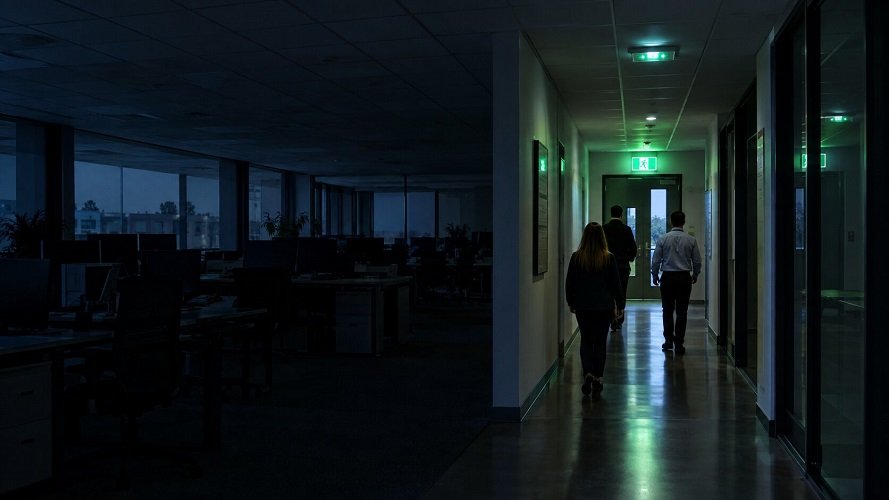
Whether you own a company in Ireland or manage one, there’s a strong likelihood you’ve encountered the terminology “emergency lighting” at some point during a fire safety assessment or an insurance evaluation. What does the term mean for your property, and why is it so significant? At Clonegal Electrical, we get questions concerning emergency lighting Ireland on a weekly basis, so we think it would be worthwhile to take a closer look into the matter.
What Is Emergency Lighting, Really?
Emergency lighting is exactly what it sounds like, lighting that switches on automatically the moment your main power supply fails. Think of a sudden blackout, a fire, or an electrical fault. In that split second of darkness, people need to be able to see exit signs, find doorways, and get out safely without stumbling over stock, furniture, or each other.
It’s not just a “nice to have.” For most commercial, industrial, and multi-occupancy buildings in Ireland, emergency lighting systems are a legal requirement under fire safety legislation. Offices, retail units, warehouses, schools, apartment blocks, and hospitality venues all fall under this umbrella. If your building has staff, customers, or tenants relying on safe evacuation routes, you almost certainly need one.
Why Emergency Lighting Systems in Ireland Businesses Trust Matter So Much
Business owners have a tendency to think that their average lighting is “good enough,” which it is not. Common forms of lighting provide no back-up source of energy, meaning when the power goes off, so does the light. This is where emergency lighting comes in.
If installed well, emergency lighting systems have the following features:
- Exit points and corridors are lit up.
- Fire-fighting equipment and alarm call points are clearly marked.
- Lighting allows for movement in a calm and safe way.
- It works for a set period of time after power failure (usually between 1 and 3 hours).
For property managers in Ireland, ensuring that everything is in order is about way more than meeting regulations. It is about having people’s safety ensured at all times.
Maintained vs Non-Maintained Systems
One thing that trips people up is the difference between maintained and non-maintained emergency lighting.
Maintained systems are lit at all times; whether the power is on or off, you’ll often see these in cinemas, theaters, or venues where the lights are dimmed during normal use anyway.
Non-maintained systems stay off during normal operation and only activate when the mains power cuts out. This is the more common setup in offices, warehouses, and retail spaces.
Choosing the right type depends on your building’s layout, usage, and specific fire safety assessment. This is where getting a qualified electrician involved early really pays off, rather than guessing and hoping it passes inspection.
Testing and Maintenance: The Part People Forget
Here’s something that catches a lot of businesses off guard: installing emergency lighting isn’t a one-and-done job. Irish fire safety standards require regular testing, typically a monthly function test and a full annual duration test where the system runs on battery power for its rated time (often three hours) to confirm it’s actually working when it counts.
Skipping this isn’t just risky; it can also invalidate insurance claims or land you in trouble during a fire safety inspection. A well-maintained system on paper means nothing if the batteries have quietly died in the back office.
Getting It Installed Properly
Be it installing new electrical equipment for a new commercial unit, retrofitting electrical systems in an older building, or just making sure that your electrical systems meet safety codes, professional installation is key. The ability of a qualified electrician to be able to read a blueprint and recognize the safe and appropriate placement of outlets separates him or her from a DIY enthusiast.
At Clonegal Electrical we offer emergency lighting installation, inspection, and maintenance services to customers throughout Ireland. Our experienced team is always ready to explain what your particular location requires before the work on the project begins.
Frequently Asked Questions
1. Is it compulsory to have emergency lighting in Ireland?
Most commercial, industrial, and multiple occupancy buildings do require emergency lighting. Fire safety regulations dictate that sufficient emergency lighting must be in place around escape routes, leading to enforcement action and compromised insurance positions.
2. What is the frequency of testing emergency lighting?
The standard practice entails having a monthly functional inspection (which is effectively only to check that the emergency lighting works) and a full annual test, where the whole system should be completely operational for the specified duration (generally three hours).
3. How long do emergency lights last during a blackout?
Depending on the premise and its evacuation plan, most systems have been designed to operate for one or three hours, and the electrical technician will make a determination accordingly.